
Most NJ homeowners light the fireplace in October and don’t think about the chimney until something goes wrong. Santa won’t be happy coming down a dirty fireplace. A slow draft, a smoky living room, or a strange smell are all signs you need chimney cleaning that is in debt. Knowing how often to schedule chimney cleaning keeps your fireplace running safely and saves you from mid-season trouble when most contractors are busy.
Why Do Homes Need Regular Chimney Cleaning in New Jersey?
Every time you burn wood, the fire produces smoke that carries unburned carbon particles up through the flue. Those particles cool as they rise and stick to the inner walls of the chimney as creosote. Creosote is flammable.
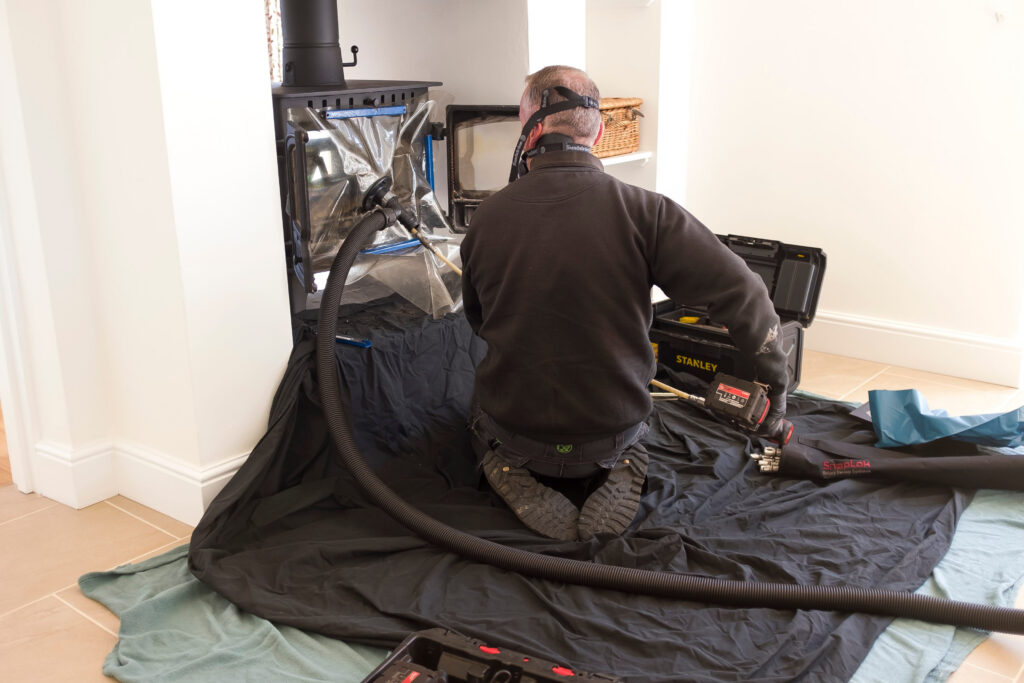
Chimney Cleaning After Winter
When enough builds up, and the flue reaches the right temperature, it ignites. And now fire is on everything, or everything is on fire. It doesn’t matter because it burns.
A blocked or dirty chimney also traps carbon monoxide inside the home. Carbon monoxide is colorless and odorless and causes nearly 500 deaths in the United States each year. Regular cleaning removes creosote, clears blockages, and gives a technician the chance to catch liner cracks, damper problems, and cap damage before they become costly fixes.
How Often Should You Clean Your Chimney?
The frequency of cleaning your chimney depends on what you burn and how often you use the fireplace.
Wood-Burning Fireplaces
Clean at least once per year, or after burning one cord of wood, whichever comes first, for better or worse. Hardwoods like oak and maple burn cleaner than softwoods like pine. Pine produces more creosote per fire and may push your cleaning schedule to twice per season if you burn frequently.
Gas Fireplaces
An annual inspection is still required, as gas burns cleaner than wood, but it does not mean there is no need for service. Debris, bird nests, and spider webs block gas flues and create backdraft conditions that push fumes into living spaces.
Pellet Stoves
Clean the vent pipe once or twice per heating season, as pellet stoves produce fine ash that accumulates in exhaust pipes faster than most homeowners expect. If you use your fireplace three or more times per week from November through March, be sure to schedule a mid-season cleaning in addition to the standard annual service.
How NJ’s Climate Affects Your Cleaning Schedule?
New Jersey winters are cold, wet, and long. That combination works against your chimney in two specific ways.
Moisture: NJ’s coastal humidity and heavy winter precipitation increase mortar and liner deterioration. Water enters through cap gaps, cracked crowns, or damaged flashing and softens creosote deposits. This makes it harder to remove and corrodes it faster.
Storm debris: People living here in New Jersey deal with nor’easters, ice storms, and heavy leaf fall. Branches, leaves, and animal nests enter uncovered or damaged chimneys after storms. The chimney gets blocked, and the risk gets high.
Signs Your Chimney Needs Cleaning Before the Season Ends
It pays to be safe. Do not wait for the annual visit if you notice any of the following signs.
- A persistent smoky smell in the room when the fireplace is not in use. This usually means creosote is off-gassing through gaps in the damper or liner.
- Smoke backing into the room during a fire signals a blocked or partially blocked flue.
- Visible black, oily staining around the firebox opening side or on the damper plate.
- A sluggish draft is a strong signal that something is not right. Light a match near the open damper. The flame should pull toward the flue. If it drifts sideways or downward, airflow is compromised.
- Sounds from inside the chimney when the fireplace is not in use. Birds, squirrels, and raccoons nest in uncapped NJ chimneys. A nest is both a blockage and a fire hazard.
Conclusion
You need to clean your chimney if you own it. You cannot ignore the cleaning part, as you are putting yourself, your beloved, your possessions, and your house too. That’s too much damage at risk for what it’s worth. So make sure to clean it regularly and keep looking for the signs.
Frequently Asked Questions
How often should I clean my chimney if I only use the fireplace a few times per year?
Once per year is the minimum, regardless of usage frequency. The National Fire Protection Association recommends annual inspection for all chimneys, even those with minimal use. Birds, moisture, and debris cause damage whether or not a fire has burned.
Does a gas fireplace need chimney cleaning?
Yes, gas fireplaces require annual inspection to check for flue blockages, liner condition, and proper venting. A blocked gas flue can push carbon monoxide into the home.
Can I use creosote-sweeping logs instead of professional cleaning?
Creosote sweeping logs dry out Stage 1 creosote deposits and make the next cleaning easier. They do not replace professional cleaning and do not address Stage 2 or Stage 3 buildup, liner damage, or animal blockages.
What time of year should NJ homeowners schedule chimney cleaning?
NJ homeowners should schedule chimney cleaning in spring or early summer, as it avoids the October rush, gives time to complete any repairs before winter, and ensures that the fireplace is ready when temperatures drop.
How long does a chimney cleaning take?
A standard cleaning and inspection takes 45 minutes to 90 minutes, but the actual time depends on the condition of the flue and the fireplace type.
Get Your Chimney Cleaned by JD Family Vent Cleaning
JD Family Vent Cleaning serves homeowners across New Jersey. Whether you burn wood, gas, or pellets, the team inspects and cleans your chimney before problems start. Book your appointment before the fall rush and go into winter knowing your fireplace is clean, clear, and safe to use.


