
If your house feels dustier than usual, or your energy bill has been rising for no obvious reason, then we need to talk. There’s a pretty high chance that it’s because of your air filter. Most New Jersey homeowners only change their filter when they magically remember, which is way too late. Having a proper air filter replacement schedule makes a bigger difference than most people realize.
It is best to replace your air filter every 60 to 90 days. In New Jersey, that timing changes depending on various factors like humidity, pollen levels, pets in the home, and how often your system runs. Let’s break it down so you know exactly when to swap yours out.
Why the Filter Matters?
Your HVAC system pulls air through a filter before sending it back into your home. Each time it runs, that filter traps dust, pollen, pet hair, mold spores, and other small particles that are floating in the air.
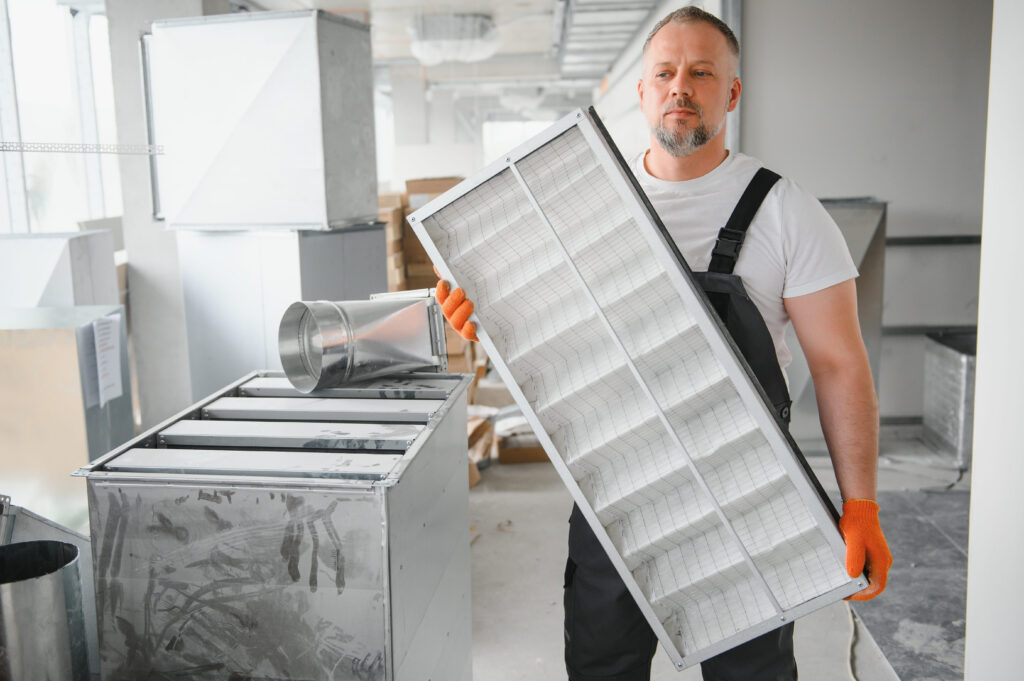
Air Filter Should Be Replaced Regularly
Over weeks and months, those particles stack up. The filter gets thick with debris, and airflow slows down. Your system has to work harder just to push the same amount of air through, which burns more energy and puts stress on the blower motor and compressor.
A clogged filter does not just hurt your energy bill. It can also cause your system to overheat, freeze up, or break down early. And the air quality in your home drops, meaning those same particles the filter was supposed to catch start circulating back through your rooms.
Changing the filter is the cheapest maintenance task on your entire HVAC list. A filter costs a few dollars. A blower motor replacement costs several hundred.
How Often to Change Your AC Filter Based on Filter Type?
Not all filters live the same life. The type of filter you use changes how often you need to pull it out and put a fresh one in.
- Basic fiberglass filters (1-inch, disposable): These are the thin, cheap ones sold in packs at the hardware store. They catch large debris but not much else, and they fill up fast. Replace these every 30 to 45 days. They’re not built to last, and stretching them to 90 days is asking for restricted airflow.
- Pleated filters (MERV 8 to 11): These are the most common filters used in New Jersey homes. They have more surface area than fiberglass filters, so they can catch smaller particles like pollen and pet dander. In a normal home, a good pleated filter usually lasts about 60 to 90 days. During high pollen season or times when your HVAC system runs more often, it’s better to check them closer to every 45 days.
- High-efficiency filters (MERV 12 to 16 or HEPA): These filters are great, they capture very small particles like mold spores, bacteria, and smoke, and are a strong choice for homes with asthma or allergy concerns. Their only downside is that they get dirty more quickly than standard filters. Most homes need to replace them every 45 to 60 days and sometimes even sooner during high pollen or heavy use seasons.
- 4-inch and 5-inch media filters: These thick filters have a lot more surface area and actually last longer, sometimes 6 to 12 months. If your system uses one of these, check it every few months rather than replacing it on a monthly schedule.
A quick check that takes 30 seconds is to pull the filter out and hold it up to a light. If you cannot see light passing through the material, replace it. Do not wait for the calendar reminder.
What Speeds Up Filter Clogging in New Jersey Homes?
New Jersey is not the easiest environment for air filters. Between spring pollen, summer humidity, coastal salt air near the shore, and long winters with the heat running constantly, filters take a beating here.
- Weather and environment pressure: New Jersey air filters deal with pollen in spring, humidity in summer, salty coastal air near shore areas, and heavy heating use in winter.
- These conditions increase dust and particle buildup in filters.
- Pets in the home: Dog and cat hair clogs filters quickly because it traps dust and builds up fast. One pet usually reduces filter life to about 60 days. It the trouble is double, or heavy shedders like Huskies or Golden Retrievers, shorten it to 30 to 45 days due to higher hair volume.
- High household activity: More people mean more dust. Their movement will increase indoor particles. Families with kids and frequent cooking often need filter changes every 45 to 60 days.
- Health conditions like allergies or asthma: Homes with people who have respiratory issues need cleaner air. Filters clog faster due to higher filtration needs and should be replaced every 20 to 45 days, especially during high pollen seasons.
- Seasonal system usage: In summer, the air conditioning runs for long hours. Whereas in winter, the heating system runs continuously. More airflow means faster filter buildup.
- Coastal location effects: Homes near the shore deal with salt in the air. Salt particles add extra load to filters, so replacements are needed sooner than usual.
Keep Your Whole System Clean, Not Just the Filter
A clean filter helps, but it is one piece of a whole system. You got ducts, vents, and coils that collect dust and debris over time. If your filter is getting replaced on schedule but the air still smells off, or the system feels sluggish, the problem might be inside the ducts or on the evaporator coil.
That is exactly where JD Family Vent Cleaning comes in. Our team cleans dryer vents, air ducts, and HVAC components throughout New Jersey. We are happily helping homeowners get cleaner air and better system performance. If it has been a few years since anyone looked inside your ductwork, scheduling a professional cleaning alongside your filter maintenance routine is one of the best things you can do for your home’s air quality. Reach out to JD Family Vent Cleaning and see what a full system cleaning can do for your home.
Final Thoughts
Change your air filter based on a schedule that fits your home. Don’t rely on timelines. The weather and seasons change all year in New Jersey. Filter use depends on your home and how often the system runs. Check your filter every month. Replace it based on your household use. This improves air quality and lowers your energy bill.
FAQ
Is 90 days always enough for filter replacement?
No, 90 days is not always enough. It works for small homes with no pets and light use. Homes with pets, allergies, or heavy use need a new filter sooner. Check the filter every month to see if it needs replacing.
Do I need to change the filter more in summer or winter?
Yes, you need to change the filter more in summer and winter as air conditioners run longer in summer, and heaters run more in winter. Both push more air through the filter, so it clogs faster. Check the filter monthly during heavy use.
Can I clean and reuse a disposable filter?
No, disposable filters are not designed to be washed. Cleaning them damages the filter material and leaves gaps that let particles through. Replace them with a new one.
How do I know what size filter to buy?
The size is printed on the frame of your existing filter. It usually reads something like 16x25x1 or 20x20x4. If the print has worn off, measure the slot or the old filter itself before buying a replacement.


