
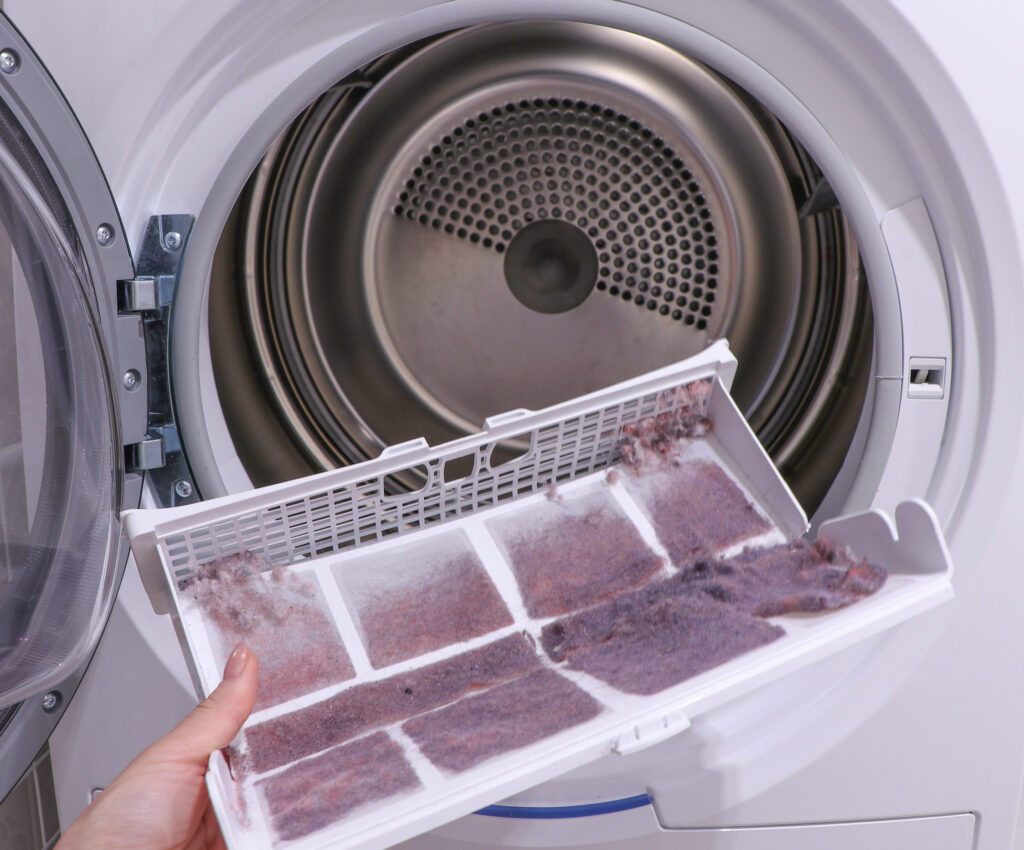
Your dryer vent’s lint trap does a great job of catching the vast majority of lint, but there’s still a little bit of lint that gets through every single time a load of laundry goes through the dryer. On shorter runs, that’s less buildup, but on a long run, which a lot of houses have when dryers are on second floors or where dryers are not located on exterior walls, that buildup builds up over time.
Why Dryer Vent Cleaning Matters
It Reduces Fire Risk
That buildup starts to reduce the size of the duct, making it harder on the blower motor, but also building up lint, which is highly combustible, carrying the risk of fire.
Clean Your Dryer Vent Before Moving In!
A New Home’s Vent History Is Often Unknown
Generally, on a 3 to 4-year basis, maybe sooner, dryer vents need to be cleaned. If it’s unclear the last time a dryer vent has been cleaned, moving into a new home is a great time to make sure it gets done by a professional. Some dryer manuals do recommend cleaning more often, so whatever the manual says is what should be followed, but as an industry standard, once every year is the general recommendation.
It Catches Loose Connections and Hidden Moisture
A humid laundry room, or one with too much lint, doesn’t necessarily mean the dryer vent is dirty; it may just mean the transition hose is loose and needs to be reconnected properly. Moisture in the duct, noticed coming out the side of the house, on the roof, or worse, dripping onto drywall inside the home, is another reason to have it checked, though this often turns into an actual repair or dryer vent rebuild if something isn’t connected properly and water is escaping from the pipe.
It Confirms Proper Airflow
Before cleaning a vent, an airflow reading is taken at the exit point of the vent to measure the airflow, and after the cleaning, the same reading is taken again, usually showing an increase, with a target of around 15 to 20 mph airflow.
It Protects the Vent Setup Long-Term
Dryer wall vent covers that won’t deteriorate or damage over time from the sun and are magnetically sealed help keep animals or birds from getting into vents while not in use, while still allowing the dryer to have full pressure and open up properly.
It Ensures the Job Is Done Thoroughly
A full dryer vent cleaning process runs from the interior through the pipe all the way to the exterior. The first step is to protect the home with drop cloths. The next step is to test the dryer itself, turning it on to see if it works right and how it’s venting out of the back, then pulling it out and taking pictures before starting the cleaning process.
A transition hose, semi-rigid duct, flexible yet strong enough to have some firm rigidity, helps keep it from getting beat up and damaged behind the dryer. A dryer vent reverse tool connects to the dryer duct and allows cleaning from inside the home without leaking lint into the ambient air of the home. In tight situations where the washer can’t be removed, a MAG vent allows the dryer to slide back and connect magnetically, making it easier to disconnect for re-cleanings and future access.
One preferred method for the actual duct cleaning uses flexible rods made out of fiberglass with rotating brushes that brush the entire duct from where it starts behind the dryer, through the walls, down into the crawl space, until the exit point of the house, so everything is thoroughly brushed and cleaned. The rotation on the drill, along with a high-power vacuum cleaner hooked up to the transition hose, is key to the process, running through the vent system two or three times, rotating and suctioning lint out at the same time.
It Requires Finding a Legitimate Service Provider
To avoid duct cleaning scams, find out who the actual company is before they send someone to the house, check their reviews, look up their actual phone number and call to make sure that they’re the ones coming and not someone else. Make sure they’re NADCA certified, since legit companies won’t get nervous when hard questions are asked. If someone sold the service through a Facebook group, that’s fine as long as they’re not lying or leaving out important details, so knowing what’s being signed up for matters before scheduling anyone to come out.


